

In the professional audio field, a long-standing cognitive divide exists: entry-level users obsess over specs on paper, while seasoned practitioners trust their auditory intuition. Producers caught in between are generally in search of a sonic texture that endows sound with "dimensionality" and "breath."
For a vast number of independent music producers and home studio owners, a common pain point lies in purchasing high-end condenser microphones like the Neumann U87 or AKG C414, only to be constrained by the performance bottleneck of their audio interface's built-in preamps. The captured sound, while clear, often ends up dry, cold, and lacking dynamic viscosity, failing to reach the "air" and "analog flavor" found in commercial records. The essence of this problem is that the preamp fails to fully drive the microphone, significantly lowering its performance ceiling.
Alctron’s MP100V2 vacuum tube microphone preamplifier targets this market gap precisely. Leveraging a "Tube-Solid State Hybrid" topology, it offers a comprehensive front-end solution that not only fully drives high-end microphones but also imparts controllable coloration to the sound.
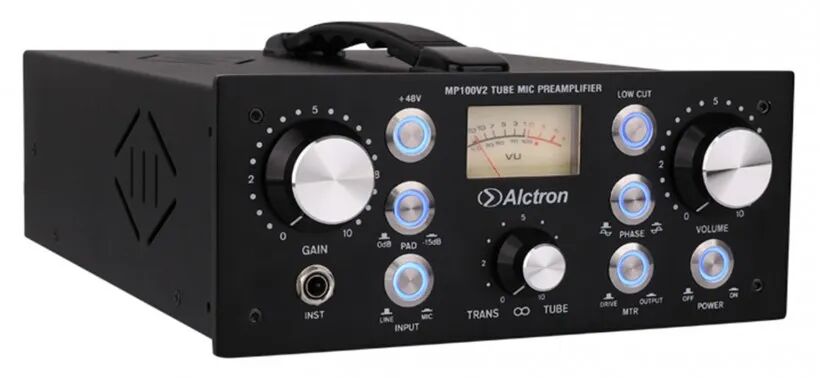
After two weeks of deep interaction and functional verification, this review strips away complex circuit theory and analyzes the unit’s performance in terms of tone shaping, functional logic, and system integration based on actual recording workflows.
Appearance and Industrial Design
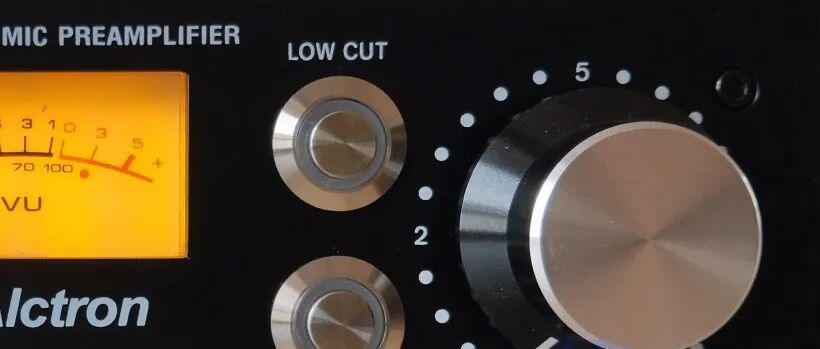
The MP100V2's exterior design exudes a distinct pragmatism. The knobs and VU meters on the front panel evoke a strong sense of nostalgia, representing classic elements of analog recording equipment. The backlit buttons are the only design cues that align with contemporary aesthetics; the blue light emitted when pressed is clear and striking in dark environments, instantly anchoring the visual point back to the digital age.
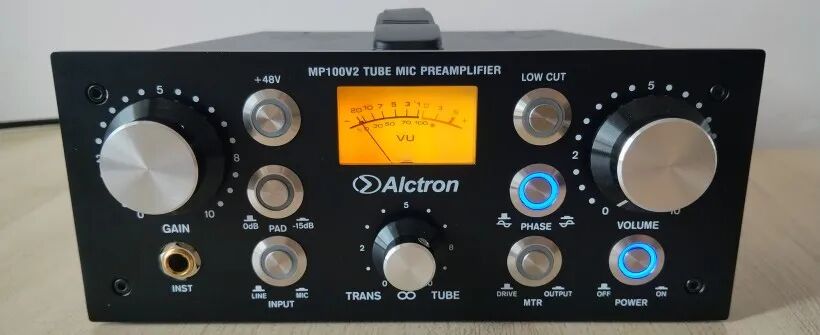
This coexistence of "analog foundation" and "contemporary details" does not create a stylistic split; rather, it forms a functional dialogue—"retro elements ensure tactile and intuitive operation, while modern design enhances the clarity of status feedback." The overall layout is concise and restrained, with no exaggerated paintwork or unnecessary decorations. The functional zones are clear at a glance. It continues Alctron’s consistent design philosophy, conveying a sense of trustworthy industrial reliability.
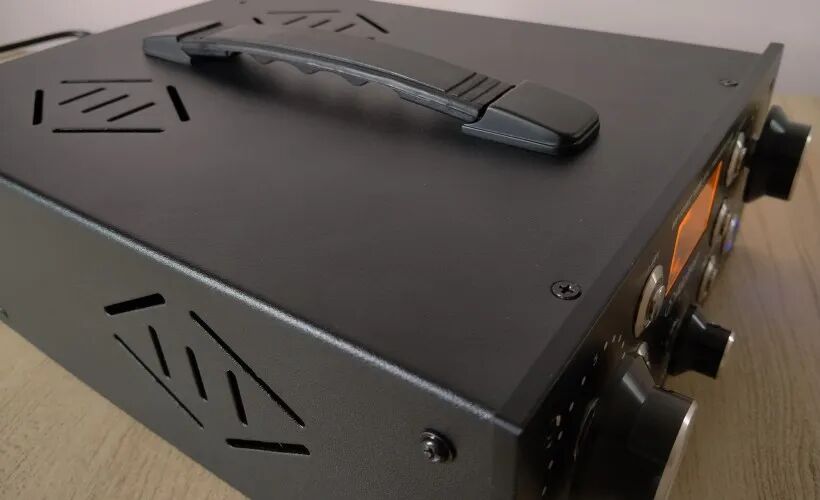
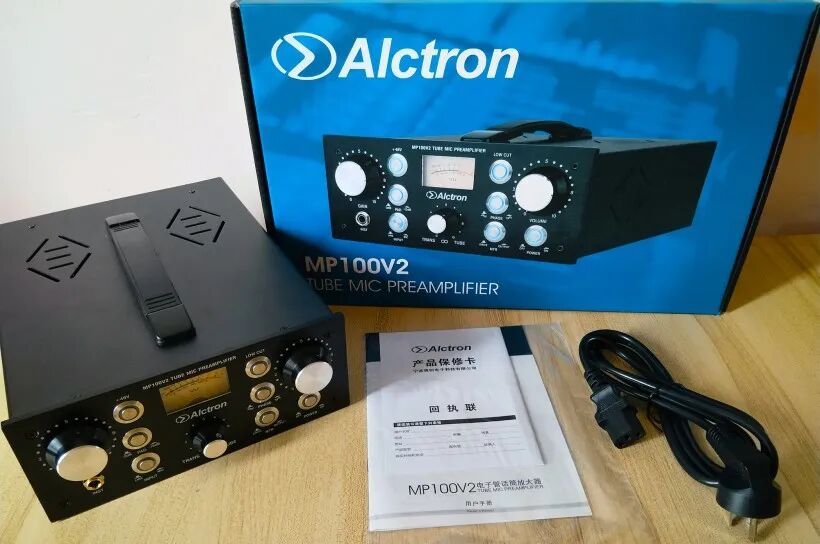
The casing is made of high-quality steel plate stamped into shape, feeling heavy and substantial, which provides significant reliability (see image below). Its practicality lies in the fact that when installed in a rack, the sturdy chassis effectively suppresses resonance. Furthermore, it shields against electromagnetic interference. In a desktop working environment filled with potential interference sources like power adapters and wireless routers, the MP100V2 maintains stable noise floor control with no audible RF noise crosstalk.
The front panel layout logic is extremely clear, adhering to a "what you see is what you get" operation standard. It is worth praising that the tactile feel of all controls mimics the experience of analog equipment: the backlit switches provide clear feedback, accompanied by a crisp "click" when pressed fully, and they snap back quickly when released; the knobs feel fine and delicate, with steady yet smooth damping during rotation, making them very suitable for fine adjustments and ensuring high operational accuracy. This tactile experience reminded me of operating analog mixing consoles in my university recording classes—a feeling that digital equipment simply cannot replicate today.
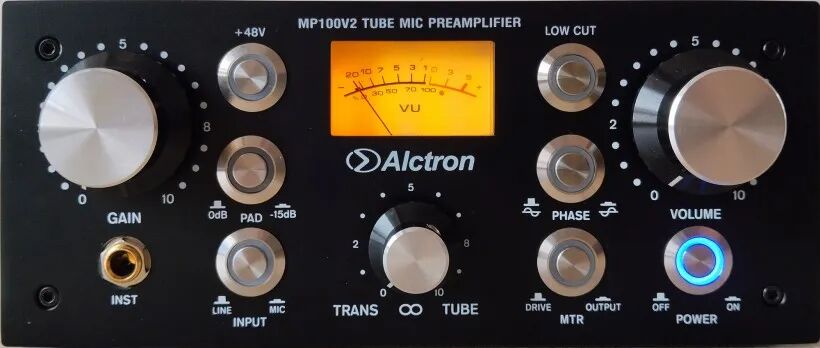
The rear panel is the interface area, providing XLR line balanced inputs/outputs and microphone inputs (see image below).
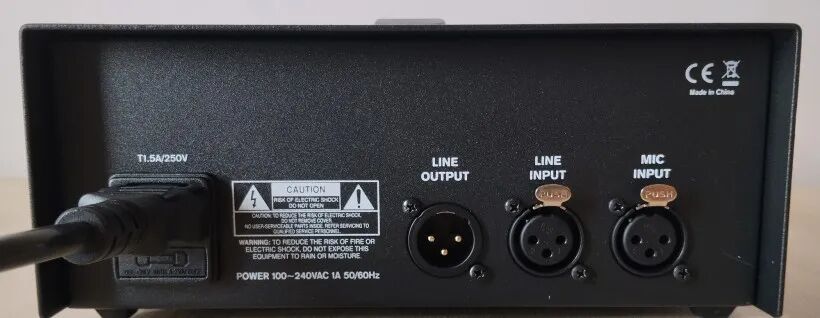
It is worth noting that the MP100V2 uses a built-in power supply design. This eliminates the clutter of external power adapter cables, improving desktop organization. However, having the power transformer co-exist within the same chassis as the audio amplification circuit places higher demands on PCB layout and shielding craftsmanship. Poor design could introduce "power frequency interference" (audible low-frequency hum generated by the 50 or 60Hz frequency of AC power and its harmonics coupling into the audio signal path via electromagnetic radiation or conduction). In actual use, the MP100V2 showed no such issues, and the noise floor control remained at a reasonable level.
The product bundle is simple: just a user manual, warranty card, the main unit, and a power cord. A very pragmatic approach.
Core Topology
The most striking technical feature of the MP100V2 is its TRANS ∞ TUBE (Tube/Transistor Saturation Mixing Knob). This is not merely a marketing highlight but the core mechanism defining the device's tone calibration capabilities.
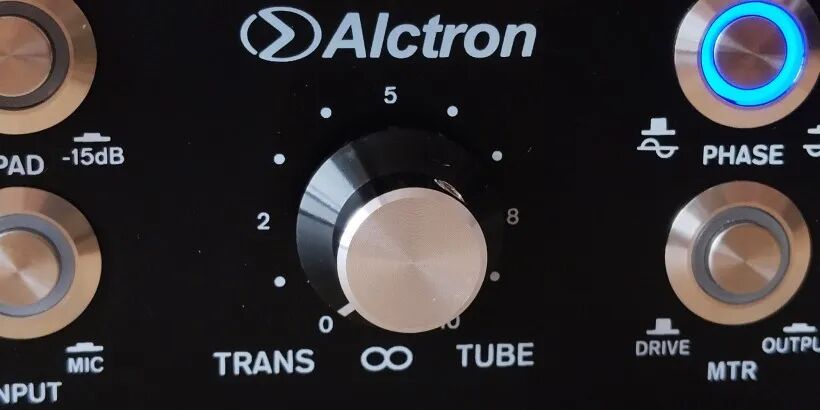
A common pitfall of entry-level tube preamps is the intentional introduction of excessive harmonics to create "tube flavor," which results in sluggish transient response—what the industry calls a "muddy" feel. The MP100V2's design logic demonstrates higher sophistication: it first constructs a low-distortion, high-speed solid-state amplification foundation, then gradually injects even-order harmonic coloration generated by the 12AX7B vacuum tube via the mixing knob.
When the knob is at the far left (Pure Transistor Mode): The device delivers high-fidelity audio with distortion as low as 0.005%. The sound is precise with excellent transient response, making it ideal for recording high-dynamic-range orchestral music or as a line input for synthesizers. In this mode, it serves as a highly versatile, standardized tool.
As the knob is rotated to the right (Hybrid Mode): The mid-to-low frequency range begins to exhibit a "fluffy" texture. Vocal sibilance is wrapped in a rounded "frosted texture," while high-frequency air is retained and given an added sheen.
The user value of this design lies in the fact that it is no longer a preamp with a fixed tone but a "tone shaping platform" with continuously adjustable parameters. Producers can adjust the coloration ratio in real-time based on the singer's vocal characteristics. For example, one might apply a higher tube mix ratio (approx. 60%) for a slightly hoarse rock male voice to give it a more "luxurious" texture; for a bright female voice, only a small amount of mixing (approx. 30%) is applied to preserve its transparency while coating it with a thin layer of warmth.
Functional Details
Beyond the core coloration function, the MP100V2's practical configurations demonstrate a deep understanding of the recording workflow—features that beginners often overlook but seasoned professionals consider essential:
1. High Gain Reserve and "DRIVE" Mode:
The official rated gain is up to 70dBu (Mic gain range 10-60dBu). This means that even when using low-sensitivity dynamic microphones like the classic Shure SM7B, the MP100V2 provides sufficient and healthy output levels without the need for an additional booster.
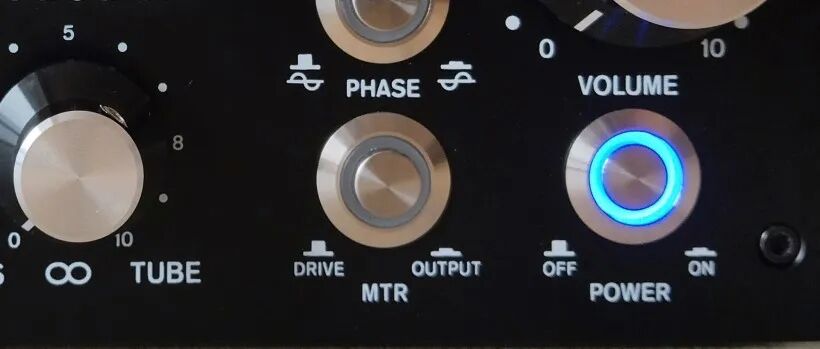
Its "MTR" mode design is particularly ingenious. By default (DRIVE mode), the VU meter displays the input signal level; pressing the button switches the VU meter to display the current output signal level. This allows engineers to set safe levels quickly using the visual feedback of the VU meter without needing to check the Digital Audio Workstation (DAW) level meters, effectively avoiding digital clipping.
2. Front-end Signal Processing:
The low-cut switch on the panel provides a 3dB low-frequency roll-off. Note that this roll-off slope is relatively gentle. Its purpose is not to completely cut out the "pop" sounds caused by plosives (which usually requires a steep filter below 80Hz), but rather to counteract the accumulation of low frequencies caused by room standing waves. If the recording environment hasn't been fully acoustically treated, enabling this function can make vocals sound cleaner.
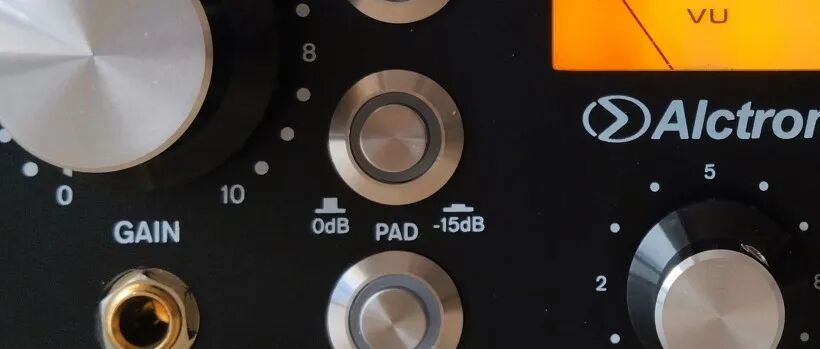
The -15dB PAD attenuation switch is a safety mechanism for recording percussion overheads or high-dynamic vocals. Combined with the high-impedance input (2.2M ohms), this feature ensures that the preamp will not easily distort even when facing extremely high sound pressure level signals.
Performance in Typical Application Scenarios
Based on its circuit design and functional configuration, the MP100V2 demonstrates clear applicability and advantages in various standard recording scenarios:
Scenario 1: Acoustic Instrument Recording (with Small-Diaphragm Condenser Mics)
In pure transistor mode, the device imparts a sharp sense of line to the sound, rendering the metallic texture and overtone structure of string instruments clearly. When switched to hybrid mode (approx. 50% mix ratio), the warmth in the midrange is significantly enhanced, and the cavity resonance of wooden instruments is amplified. This is particularly suitable for solo pieces, effectively enhancing the immersion and musicality of the performance.
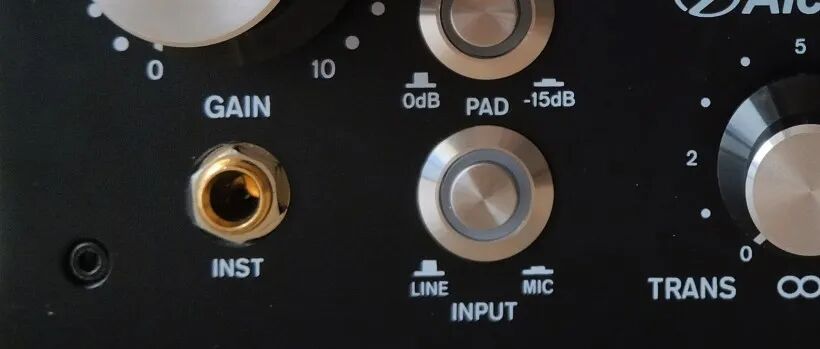
Scenario 2: Instrument DI Recording (High-Impedance Instrument Input, see image below)
The 2.2M ohm high-impedance input ensures that the full spectrum of electric bass or electric guitar pickup signals is captured accurately, with no attenuation of high-frequency overtone details. Setting the mixing knob to a higher ratio (approx. 80%), the gentle compression effect and harmonic components introduced by the tube circuit simulate the overdrive texture of a classic tube amp head, giving the sound a "fuzzy," fuzzy touch. This allows the instrument to occupy a firmer position in the frequency spectrum of the final mix, reducing reliance on exciter or saturation plugins in post-production.
Scenario 3: Vocal Recording (with Large-Diaphragm Condenser Mics)
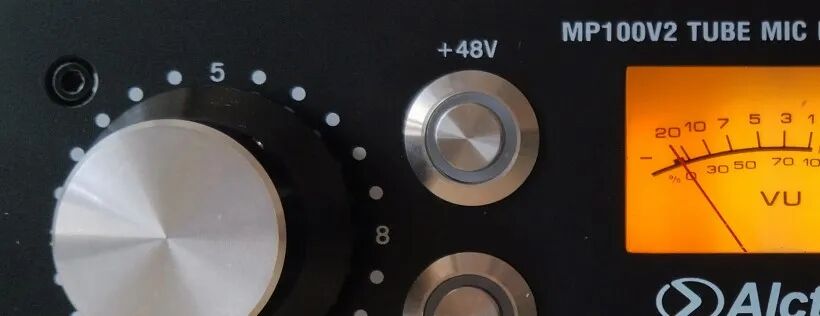
Although the device contains a tube amplification stage internally, its 48V phantom power supply is clean and does not introduce audible noise pollution to the microphone itself. When driving high-pitched vocals, the ample gain reserve does not introduce significant background noise. Compared to solid-state preamps in the same price range known for their "impact," the MP100V2's transient response is slightly softer. However, when expressing long-breath, lyrical vocals, its handling of the "extension" of the tail notes helps enhance the sustained emotional transmission.
Performance and Applicability Boundaries
After highlighting its advantages, it is necessary to clearly state its technical limitations and applicable boundaries to establish an objective evaluation standard.
Coloration is not a repair tool: Its boundary lies here—if the recording material has severe acoustic environment defects or pitch issues, the warmth of the tube will actually blur the identification of flaws, interfering with judgment during post-correction. Its essence is to beautify "tone," not to correct "pitch" or "sound field."
Objective differences in ultra-low frequency performance: Its limitation lies here—while the MP100V2 is competitive in coloration within the mid-to-high frequency range, it presents a different tuning orientation regarding the weight and physical impact of ultra-low frequencies. Its low-frequency depth meets standard recording needs, but compared to preamps equipped with heavy-duty output transformers, it lacks that extra "physical sensation" energy brought by hardware physical characteristics. This makes it more inclined toward Pop, Folk, and vocal recording in terms of style adaptability. For Heavy Metal or scenarios requiring high demands on ultra-low frequency impact, it is recommended to pair it with an external compressor or EQ for supplementary processing.
Technical Parameters
Max Power Consumption: 160mA @120V AC, 20W
Mic Input Impedance: 2KΩ
Mic Gain Range: 10-60dBu
Line Output Impedance: 10KΩ
Line Gain Range: -10-40dBu
High-Z Input Impedance: 2.2MΩ
High-Z Gain Range: -10-40dBu
Output Impedance: 600 Ω
Attenuation: -15dB
Total Gain: 70dBu
Min THD+N @+4dBu: Tube 0.1%; Transistor 0.005
Gain Range (Mic: 10-60dBu; Line/High-Z: -10-40dBu): The 60dBu maximum mic gain means it can drive the vast majority of dynamic microphones (like SM7B, MD421) to ideal recording levels without needing an additional booster. The line input provides a gain range of -10 to 40dBu, meaning it can both attenuate overly strong line signals (like synth outputs) and boost weak line signals appropriately, offering greater flexibility than many preamps in the same price range.
Input Impedance (Mic: 2KΩ; High-Z: 2.2MΩ): The 2KΩ mic input impedance is a standard modern preamp configuration, matching well with most condenser and dynamic microphones. The high-Z input impedance of 2.2MΩ is crucial for electric guitar and bass direct recording (DI), meaning it can fully capture the high-frequency overtones of the pickups, avoiding a "muffled" or "tone-eating" signal. This is the hardware foundation for the MP100V2's excellent performance in DI scenarios.
Output Impedance (600Ω): This is within the industry standard range, ensuring good matching with the line inputs of most audio interfaces, monitor controllers, and mixing consoles, guaranteeing signal integrity without level loss or high-frequency attenuation due to impedance mismatch.
Total Harmonic Distortion + Noise (Tube mode: 0.1; Transistor mode: 0.005): The data difference between the two modes intuitively presents the trade-offs between the two amplification styles. The extremely low distortion value in transistor mode ensures high signal fidelity and transient speed; the relatively higher distortion in tube mode (though 0.1 is quite well controlled for tube gear) represents the intentional introduction of even-order harmonic coloration, which is precisely the physical source of "tube flavor."
Power Consumption (20W): This is at a reasonable level for a tube preamp. The 12AX7B tube requires heating the filament to operating temperature, so the device needs to warm up for 5-10 minutes after powering on before the tone stabilizes. This is a shared usage habit among tube equipment.
Competitor Analysis
Focusrite ISAOne (approx. 4,500 - 5,000 RMB): A classic "transistor + transformer" architecture. The sound is tough, with outstanding impact and excellent transient performance, particularly excelling at percussion and R&B recording. In comparison, the MP100V2's sound texture leans more towards "relaxed" and "expansive." The former is like a sharply defined crystal, while the latter is like warm jade.
Warm Audio WA12 (approx. 3,800 - 4,200 RMB): Also known for value, its style leans towards API, with coloration concentrated in the "fat" midrange. The MP100V2's core competitive advantage lies in its adjustability. The WA12's coloration characteristics require swapping op-amps to change, which is fixed once selected; the MP100V2 allows continuous transition from "completely clean" to "heavy coloration" via a single knob. In a personal studio with limited gear, this equates to integrating a clean preamp and a character preamp simultaneously.
Art Pro MPAII (approx. 3,000 - 3,600 RMB): A veteran tube preamp with impedance switching. Its sound style is relatively rugged with rich "tube flavor," but it sacrifices some resolution. Compared to it, the MP100V2 holds a clear advantage in tonal delicacy and signal-to-noise ratio.
Core Competitiveness Summary: Among the competitors above, the MP100V2 is the lowest in price (Market reference price: 2,980 RMB), giving it a significant advantage in the "cost-performance" dimension. Furthermore, the MP100V2 offers the broadest "continuous spectrum of tone." It is a modern hybrid device with independent design, aimed at solving the pain point of "sonic monotony."
Buying Recommendations
Solo singer-songwriters/Podcast hosts with budget constraints but seeking a quality leap: Worth purchasing. This device can fully unleash the potential of mid-to-low-end microphones, avoiding the hidden costs of constantly changing preamps. The emotional dimension brought by the tube circuit is something no software plugin can currently fully replicate.
Mixing engineers and producers seeking hardware-level coloration solutions: Highly recommended. Treat it as an external hardware saturator for processing synthesizer buses, drum buses, or lead vocals. Its "one-click analogization" effect is more natural than software algorithms and offers a more three-dimensional sound field.
Advocates of traditional analog sound quality: Consider carefully. Its sonic orientation leans towards the modern high-fidelity aesthetic of "clarity and warmth coexisting." It lacks the signature "low-end muddiness" of classic British gear or the "transient explosiveness" of American gear. It is more like an all-rounder rather than a specialist genius focused on one specific style.
Conclusion
The Alctron MP100V2 is a device worth investing time in, exploring ideal tones through the fine-tuning of knobs. It sends a signal to the market: tube preamps do not have to rely solely on the replication of antique circuits; they can also serve as "intelligent coloring tools" equipped with modern control logic. In the digital era flooded with algorithms and modeling technology, the value of analog equipment lies precisely in reconstructing the physical connection between humans and music through this non-linear, warm, and distorted characteristic.
Ningbo Alctron Electronics Technology Co., Ltd
Add: No.76, San Cheng Road, Xiu Feng Industry Area,Gaoqiao Town, Ningbo China.
E-mail: sales@alctron-audio.com
Tel: +86 574 88011699
Fax:+86 574 87157176
Post code: 315191
 简体中文
简体中文 ENGLISH


