

As a seasoned professional in the audio technology field, I have witnessed multiple transformations in microphone technology. While condenser microphones dominate the mainstream recording market today, ribbon microphones continue to hold their unique position with distinctive acoustic characteristics.
Chinese brand Alctron's RM821 and RM822 passive ribbon microphones aim to make classic ribbon tone accessible to more music producers and recording enthusiasts at an affordable price. This review will delve into the performance and market positioning of these two models.
The Democratizer of Ribbon Technology
Alctron, as a renowned domestic microphone manufacturer, has consistently dedicated itself to bringing professional audio equipment within reach of broader users. In the audio industry, Alctron plays the role of a "technology popularizer," with its product strategy centered on "professional functionality at approachable prices."
The RM821 and RM822 passive ribbon microphones perfectly embody this philosophy in the realm of ribbon transducers. Before their introduction, microphones offering classic ribbon sonic traits were either prohibitively expensive brands like Beyerdynamic or Royer, or fragile vintage models requiring meticulous maintenance.
Ribbon microphones boast a rich history, operating through an ultra-thin aluminum ribbon suspended in a magnetic field. Sound waves vibrate this ribbon to generate electrical signals, endowing them with signature warm tonal quality and smooth high-frequency response. However, traditional ribbon microphones suffer from being delicate, easily damaged, and demanding careful upkeep.
The Alctron RM821 and RM82 series were designed precisely to address these challenges—they retain the acoustic essence of classic ribbon microphones while enhancing durability through modern manufacturing techniques. More importantly, they bring ribbon microphones into the budget range attainable for small to medium-sized studios and music aficionados.

Product Design: Fusion of Classic and Modern
Both models come packaged in wooden storage cases with nearly identical standard configurations, embodying an overall minimalist aesthetic.

At first glance, both the RM821 and RM822 leave a striking impression. The microphones feature a unified full-copper shell construction, complemented by a finely sandblasted surface that exudes classic elegance while resisting fingerprints.
Their compact designs strike an ideal balance—the RM821 measures φ35/27/25×160mm, while the RM822 is slightly slimmer at φ35/23×160mm. These dimensions ensure they feel substantial without overwhelming home studios or personal recording setups.
Upon closer inspection, the meticulous craftsmanship shines through. Both models boast grilles with carefully balanced density, offering robust protection for the ribbon elements while minimizing acoustic interference. The XLR connectors are securely mounted, reflecting precise engineering. Detailed close-ups of the microphones are shown below.
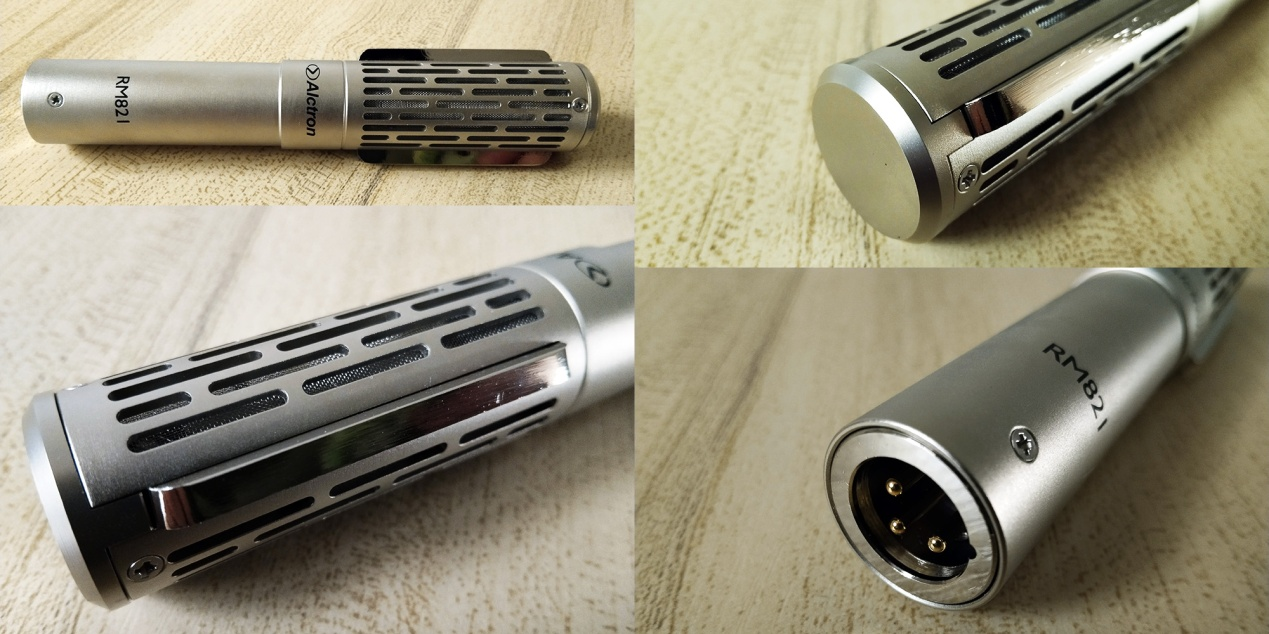

Unlike some vintage-inspired ribbon microphones, the RM821 and RM822 embrace a modern minimalist aesthetic. Their design strips away decorative elements, prioritizing functionality and practicality. This professional and understated appearance aligns perfectly with their accessible price point.
Core Features & Technical Breakdown
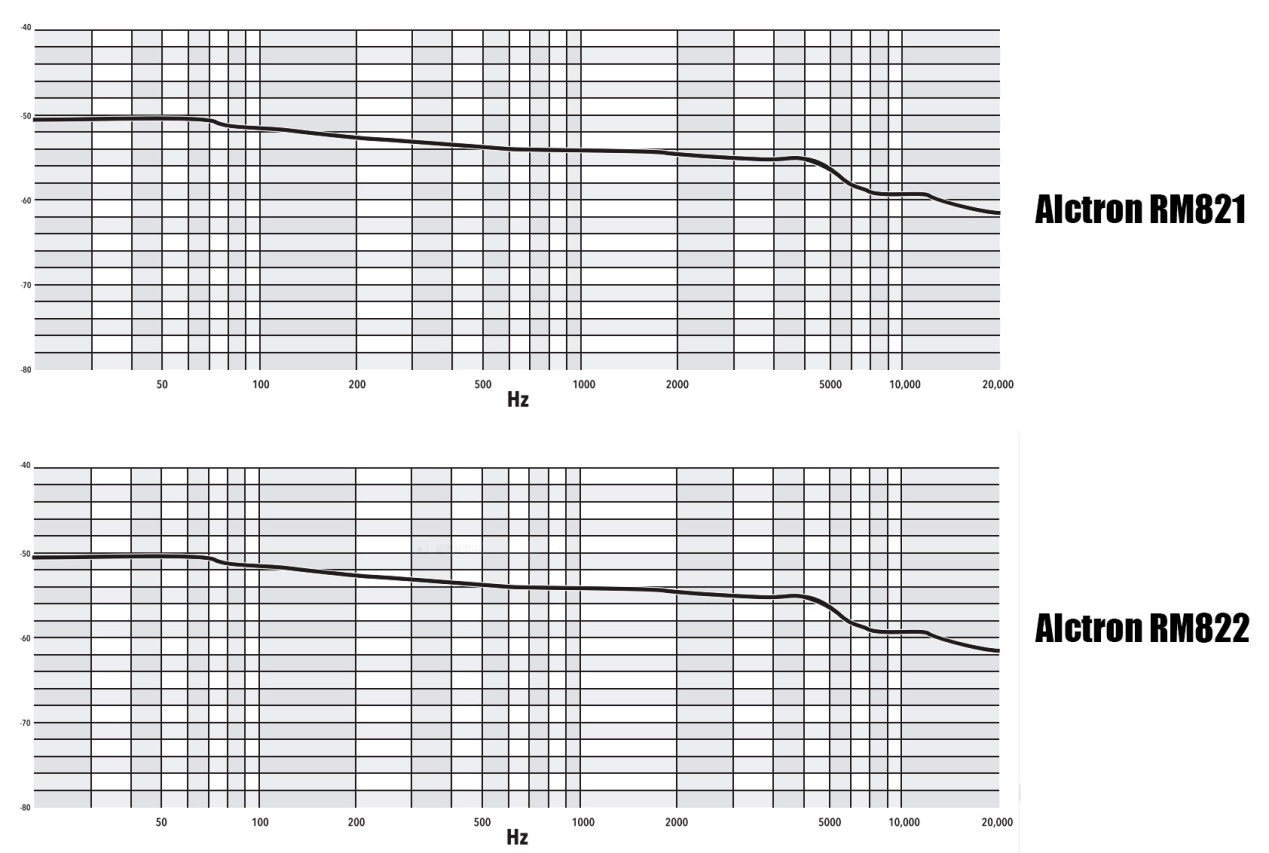
Ribbon Innovation: Both models employ a 3-micron ultra-thin aluminum ribbon—the heart of ribbon microphones. This delicate ribbon exhibits exceptional sensitivity to sound wave dynamics, capturing subtle vocal nuances and rich harmonic textures. It’s this physical property that underpins the warm, natural tonal character synonymous with ribbon microphones. Below are the frequency response curves for both units.
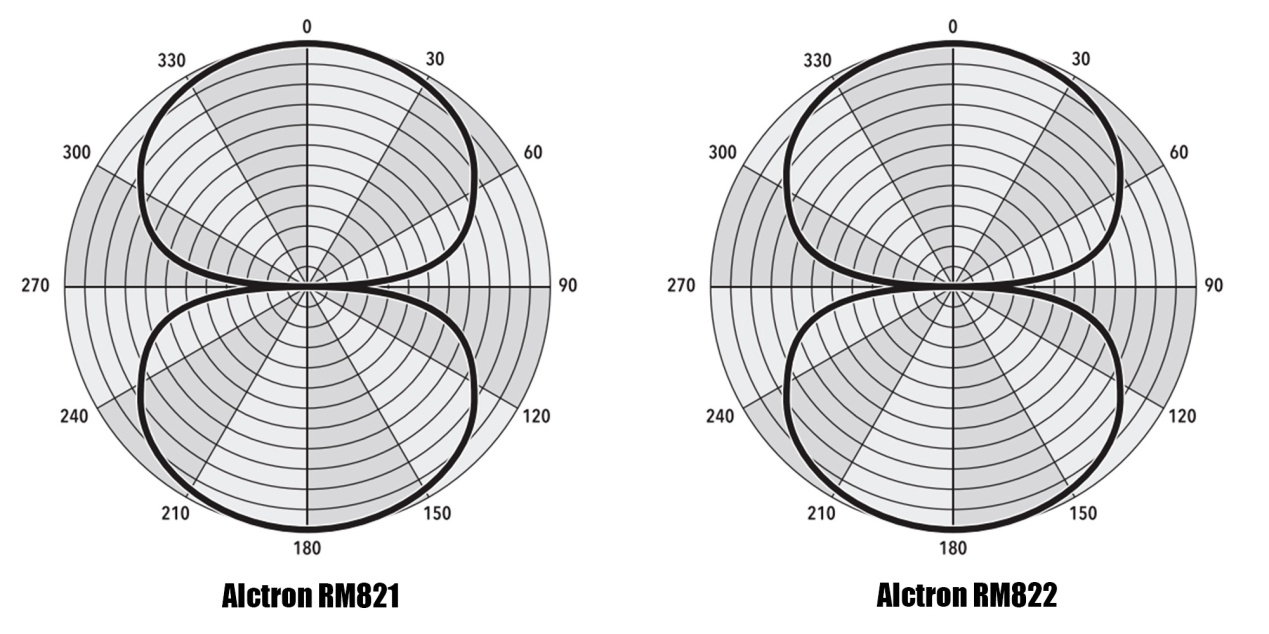
Both microphones feature a figure-8 (bidirectional) pickup pattern (see diagram below). This means they are equally sensitive to sound sources from the front and rear while rejecting audio from the sides. Such polar characteristics not only excel in capturing solo vocals or instruments but also unlock advanced recording techniques like the Mid-Side stereo configuration.
Passive Design: As passive microphones, the RM821 and RM822 operate without external power (note: 48V phantom power must be disabled). This simplifies setup but introduces a requirement—they demand high-quality preamplifiers to achieve sufficient gain. During testing, preamps with at least 60dB of clean gain are recommended to unlock their full potential.
Wide Frequency Response & High Dynamic Range: With a 30Hz-15kHz frequency response, these models cover everything from deep lows to extended highs. A maximum SPL of 148dB allows them to handle delicate sources like acoustic guitars and aggressive signals such as distorted guitar amplifiers without distortion.
For clarity, here’s a breakdown of key specifications and their practical implications:
Specification | RM821 & RM822 | Impact Analysis |
Ribbon Thickness | 3 microns | The ultra-thin ribbon captures subtle nuances, forming the physical basis for warm tonal quality. |
Polar Pattern | Figure-8 (Bidirectional) | Simultaneously captures front/rear sources while rejecting side noise, ideal for duets or MS stereo. |
Sensitivity | -48dB±2dB | Lower than condensers, requiring robust preamps; less prone to overloading. |
Frequency Response | 30Hz-15kHz | Smooth high-end roll-off avoids harshness, complementing modern digital recording environments. |
Impedance | ≤600Ω | Compatible with most audio interfaces; premium cables recommended to minimize signal loss. |
Max SPL | 148dB | Handles loud sources like brass instruments and amp cabinets effortlessly. |
Equivalent Noise Level | 18dB | Slightly higher than elite condensers, yet negligible in typical studio settings. |
Technically, the RM821/RM822 align with traditional ribbon standards while enhancing durability and usability.
Practical Applications & Performance Analysis
Vocal Recording: In vocal tests, the RM821/RM822 delivered surprisingly compelling results. They effectively tame harsh high-frequency sibilance while preserving midrange richness and warmth, making them particularly suited for male vocalists or singers with gritty timbres. While they exhibit slightly less low-mid fullness compared to premium ribbons costing several times more, they still retain core ribbon characteristics.
Guitar Amp Cabinet Recording: Capturing electric guitar amplifiers is a classic use case for ribbon microphones. Positioned 10-15cm from the cabinet, the RM821/RM822 capture balanced, harmonically complete tones without overly aggressive highs. Compared to common dynamic mics like the Shure SM57, their sound opens up with greater dimensionality.
Acoustic Instrument Reproduction: The figure-8 polar pattern shines in acoustic guitar and string instrument sessions. By strategically angling the microphone, room reflections can be controlled to achieve clear, naturally spatialized recordings. For cellos and violins, these ribbons soften bow-noise harshness while retaining resonant warmth.
MS Stereo Implementation: Leveraging their bidirectional nature, the RM822 serves as an ideal Side microphone in Mid-Side stereo pairs when paired with a cardioid condenser (as the Mid channel). This setup delivers expansive, natural stereo imaging for acoustic guitars and small ensembles.
Comparative Analysis
Against Premium Ribbons:
Compared to benchmark models like the Royer R-121 ($1,600 USD) or Beyerdynamic M 160 (¥4,689 CNY), the RM821/RM822 show noticeable limitations in ultra-high frequency extension and transient resolution—differences rooted in ribbon manufacturing precision and output transformer quality. However, priced at just ¥985 CNY, they offer unprecedented access to ribbon tonality. Crucially, they preserve signature traits: warm midrange presence and smooth high-frequency rolloff.
Relative to workhorses like the Shure SM57 or Sennheiser e609, the RM821/RM822 demonstrate superior detail retrieval and extended high-frequency response, yielding more open, nuanced textures. Trade-offs include reduced ruggedness—making dynamics preferable for live sound—but in studio environments, the ribbons hold distinct sonic advantages.
Unlike modern condensers such as the Audio-Technica AT2020 or Rode NT1, which prioritize extended frequency capture and sensitivity, the RM821/RM822 specialize in mellow, organic coloration. Their gentle high-end attenuation makes them ideal for polishing digitally harsh sources, adding analog-style warmth to clean signal chains.
User Experience & Operational Insights
During practical use, the RM821 and RM822 impressed most with their straightforward, no-fuss operation. As passive designs, they require only connection to a quality preamplifier—no concerns about phantom power setup or impedance matching.
Sonically, these microphones deliver classic ribbon hallmarks: rich midrange presence, smooth high-frequency transitions, and gentle transient response. Unlike condensers that emphasize hyper-detailed clarity, they avoid clinical brightness or brittle textures, instead infusing recordings with organic warmth and musicality.
Notably, they excel at taming sources prone to digital harshness. Acting as natural "antidotes" to sterile digital chains, they reintroduce analog-style warmth and tactile presence to overly clean signals.
While traditional ribbons demand cautious handling (vulnerable to wind blasts or pressure surges), the RM821/RM822 show improved resilience. However, their bundled clip-style shock mount—designed for dynamics—lacks dedicated ribbon protection. Disassembly confirmed internal structural enhancements, though optimal safety still requires purpose-built suspension. Below: Ribbon element close-up.

It should be noted that I did not fully disassemble the units; internal photos were captured through the casing. Firstly, due to the delicate nature of ribbon elements, and secondly, because diaphragms are sensitive components requiring minimal handling. However, the images clearly reveal a dual-filter system:
· A protective mesh directly over the ribbon element
· An additional outer grille on the microphone body
This layered defense effectively buffers against air currents impacting the ribbon.
Regarding shock resistance, a damping base is visible at the ribbon’s termination point—functionally akin to Shure SM58’s suspension design. While challenging to photograph in semi-disassembled state, this structure confirms enhanced impact resilience. Consequently, the RM821/RM822 tolerate slightly more demanding environments than vintage ribbons, broadening their practicality.
Limitations & Improvement Suggestions
Honestly, these models aren’t flawless:
1、High-Gain Preamp Dependency: Low sensitivity demands quality preamplifiers; budget interfaces compromise sonic fidelity.
2、Acoustic Sensitivity: The figure-8 pattern magnifies room noise/reflections, necessitating meticulous mic placement and acoustic treatment.
For Alctron’s future iterations: Develop an active version with built-in impedance matching circuitry to reduce preamp requirements.
Pricing & Value Proposition
Priced identically at ¥985 (~$135 USD), the RM821/RM822 deliver ~70-80% of premium ribbon performance at just one-tenth the cost of flagship models
This makes them exceptionally compelling for:
· Home studios and indie musicians seeking affordable ribbon coloration
· Professional studios adding budget-friendly "analog warmth" tools
High-risk recording scenarios where expensive mics shouldn’t be deployed
With robust all-metal construction and solid workmanship, they stand as the "Value King" in the ribbon microphone market—democratizing classic tonality without compromising core authenticity.
Purchasing Recommendations & Final Verdict
Based on varying user needs and budgets, here’s tailored advice:
l Home Musicians/Personal Studios: If you already own a basic condenser mic, the RM821/RM822 serve as excellent secondary options. They introduce warmth and vintage character absent in most condensers.
l Budget-Conscious Studios: Consider adding a matched pair (RM821 or RM822) for stereo recording or dedicated use on guitar cabinets/brass. They elevate source quality at a fraction of traditional ribbon costs.
l Professional Facilities: Ideal as specialty mics for high-risk scenarios (e.g., inside drum cavities) or creative tonal coloration.
l Podcasters/Live Streamers: Not recommended as primary vocal mics unless paired with professional preamps and acoustically treated spaces—USB condensers remain more practical.
Conclusion
The Alctron RM821/RM822 passive ribbon microphones successfully democratize classic ribbon tonality, placing it within reach of everyday producers. While not flawless replacements for flagship models like the Royer R-121, they offer ~70-80% of the sonic essence at just 1/10th the price.
For artists seeking organic warmth, natural smoothness, and analog-style musicality, these ribbons are compelling investments. They bridge the gap between sterile digital workflows and vintage charm, making iconic ribbon textures accessible beyond elite studios.
In an era where audio gear trends toward digital precision and retro hardware commands premium pricing, Alctron’s approach—delivering authentic ribbon characteristics through modern engineering—represents meaningful progress. The RM821/RM822 stand as testaments to how thoughtful design can expand creative possibilities, proving that timeless sound needn’t come with prohibitive costs.
Ningbo Alctron Electronics Technology Co., Ltd
Add: No.76, San Cheng Road, Xiu Feng Industry Area,Gaoqiao Town, Ningbo China.
E-mail: sales@alctron-audio.com
Tel: +86 574 88011699
Fax:+86 574 87157176
Post code: 315191
 简体中文
简体中文 ENGLISH


